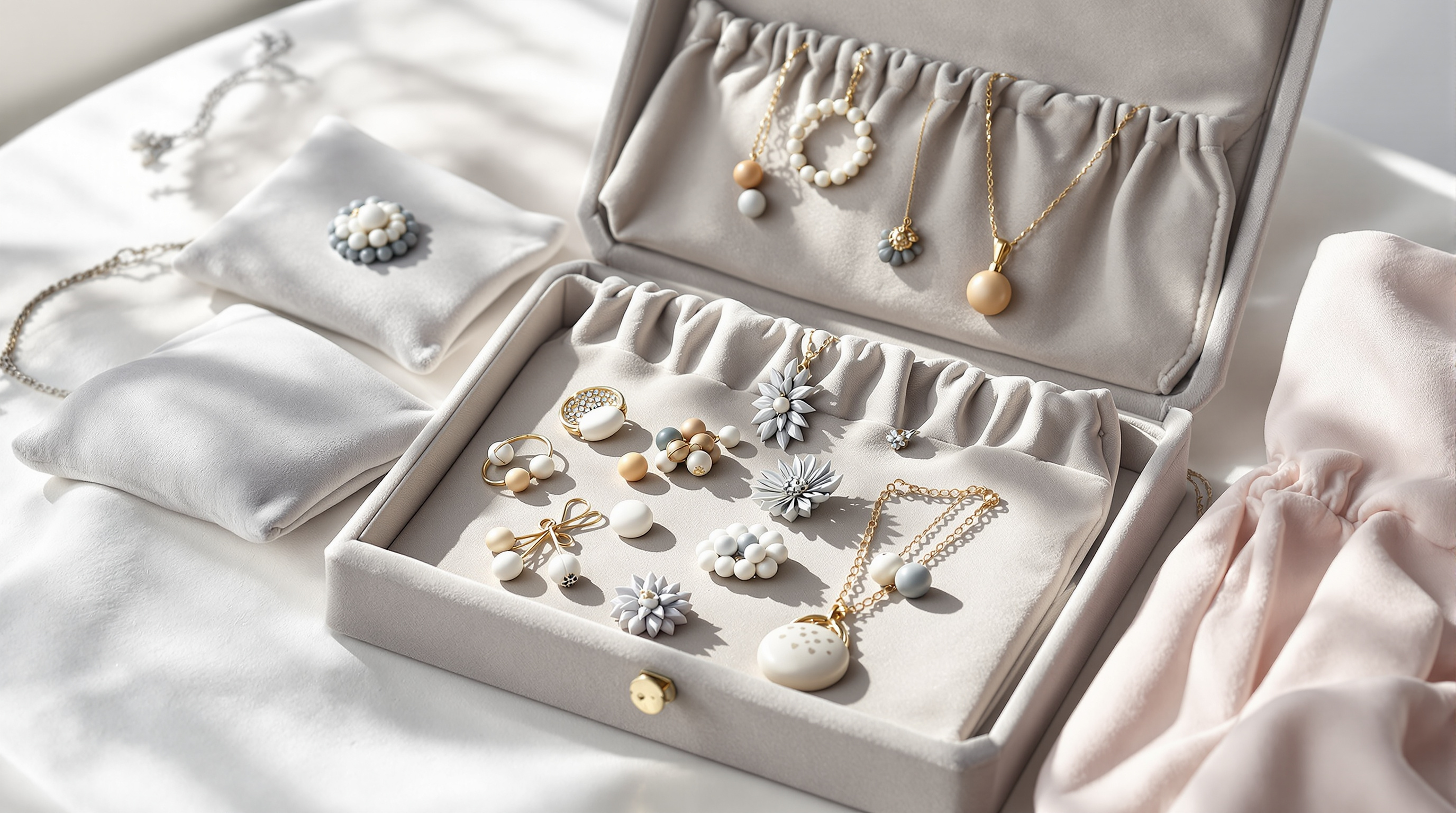
Caring for Your Jewelry
Polymer clay jewelry is designed for regular wear and will maintain its beauty for generations with basic care. These guidelines will help you get the most enjoyment from your pieces while preserving their condition.
Daily Wear
Polymer clay jewelry is remarkably durable for everyday use. The material is lightweight, comfortable against the skin, and maintains stable temperature in changing environments.
When to Wear: Your jewelry can be worn throughout normal daily activities. The material is water-resistant and won't be damaged by brief exposure to moisture.
When to Remove: Take off jewelry before bathing, swimming, or extended water exposure. Remove pieces before applying lotions, perfumes, or sunscreen, which can affect the surface over time. Take off bracelets and rings before heavy manual work.
Cleaning
Regular cleaning keeps polymer clay looking its best:
Routine Cleaning: Wipe gently with a soft, dry cloth after wearing. This removes body oils and environmental residue that accumulate over time.
Deeper Cleaning: When needed, use a slightly damp cloth with mild soap. Avoid harsh chemicals, solvents, or abrasive cleaners. Dry thoroughly after cleaning.
Surface Care: The luminous surfaces of crazed acrylic pieces benefit from occasional gentle buffing with a soft cloth. This restores shine and removes any dulling film.
Storage
Proper storage prevents damage and preserves appearance:
Individual Storage: Keep pieces separated to prevent scratching. The soft cloth pouches provided with each piece are ideal for this purpose.
Flat Storage: Store flat pieces like brooches and pendants lying flat rather than standing on edge.
Temperature: Avoid extreme temperatures. Don't leave jewelry in hot cars or near heat sources. Normal indoor temperature variations are fine.
Light: Store away from direct sunlight for extended periods. While polymer clay is light-stable, prolonged UV exposure can affect some surface treatments.
Handling
Thoughtful handling prevents accidental damage:
Hold by Edges: When examining pieces, hold by the edges rather than touching the center surfaces.
Secure Findings: Occasionally check that pin backs, clasps, and ear wires remain secure. If findings loosen, the piece can be professionally tightened.
Impact Protection: While polymer clay is durable, it can crack or chip if dropped on hard surfaces. Handle with normal care.
Repairs
If damage does occur, professional repair is often possible:
Minor Scratches: Light surface scratches can often be buffed out.
Structural Damage: Broken pieces may be repairable depending on the nature of the damage. Contact the studio for assessment.
Finding Replacement: Worn or damaged findings can typically be replaced without affecting the main piece.
Long-Term Value
Proper care protects both the aesthetic and monetary value of your jewelry. As collectible art pieces, Elise Winters jewelry benefits from documentation preservation - keep any certificates, photographs, or provenance materials with the pieces.
For questions about specific care situations, please contact the studio.